March 20, 2008
Page 123
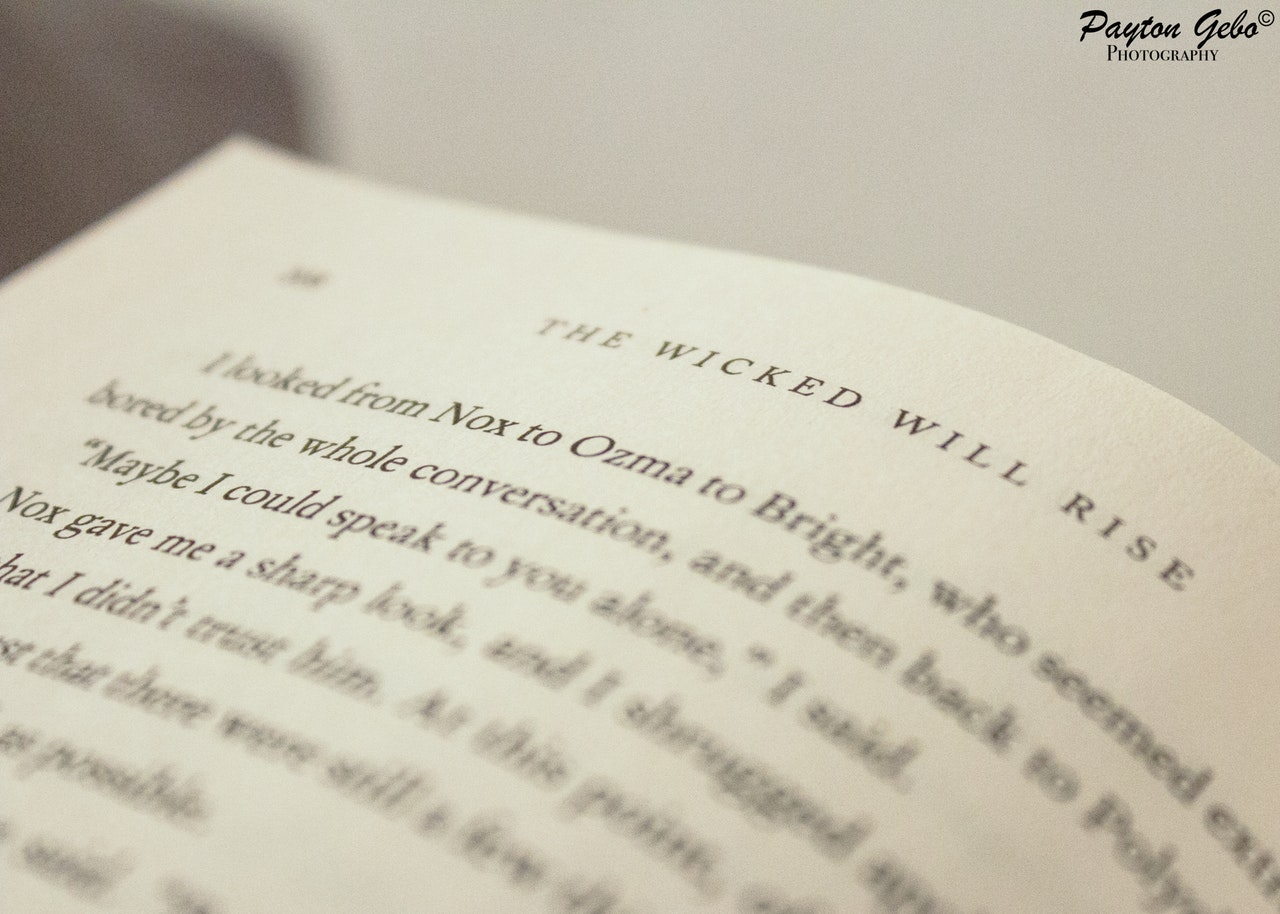
Pick up the work of fiction closest to where you are sitting right now that has 123 pages or more, turn to page 123, find the fifth sentence, then post it and the next three sentences. (via lisa romero.)
Here’s mine:
Middlesex, by Jeffrey Eugenides
“The only way my father could think of to instill in me a sense of my heritage was to take me to dubbed Italian versions of the ancient Greek myths. And so, every week, we saw Hercules slaying the Nemean lion, or stealing the girdle of the Amazons (“That’s some girdle, eh, Callie?”), or being thrown gratuitously into snake pits without textual support. But our favorite was the Minotaur…On the screen an actor in a bad wig appears.”
comments
27 Responses to “Page 123”
Leave a Reply
“And the priest shall burn the whole on the altar, and as a burnt offering, an offering by fire, a pleasing odor to the Lord. ‘If his gift for a burnt offering is from the flock, from the sheep or goats, he shall offer a male without blemish; and he shall kill it on the north side of the altar before the Lord, and Aaron’s sons the priests shall throw its blood against the altar round about.
And he shall cut it into pieces, with its head and its fat, and the priest shall lay them in order upon the wood that is on the fire upon the altar; but the entrails and the legs he shall wash with water. And the priest shall offer the whole, and burn it on the altar; it is a burnt offering, an offering by fire, a pleasing odor to the Lord.
If his offering to the Lord is a burnt offering of birds, then he shall bring his offering of turtledoves or of young pigeons. [...]‘”
The New Oxford Annotated Bible, –Leviticus 1.9-14
The Autograph Man, Zadie Smith:
As the moving van pulled up, he wrote reams of inkless fiction, fantasy scenarios: cups of sugar, lent and returned; well, since we’re both stuck indoors tonight; Oriental synergy; gentle ways to break the news to Esther…
It had not turned out that way, though. Anita wasn’t sentimental like him or interested in shared race, or coincidence (“Yes, that is correct. Both Year of the Dog. Is it a reason for celebration? Shall we break out the Pedigree Chum?”) Sometimes he bumped into the boyfriend, a strapping South African who had that charming habit of asking a question and then looking elsewhere. So it goes.
The Ladies of Grace Adieu, by Susanna Clarke:
“Mr Baillie told me that newborn children are generally the color of claret; sometimes, he said, they may be as dark as port-wine but this child was, to all intents and purposes, black. He was, however, quite remarkably strong. He gave me a great kick as I passed him to the old woman. A bruise upon my arm marks the place.”
The Kite Runner, Khaled Hosseini
What I remember next is the blinding light of early morning as I climbed out of the fuel tank. I remember turning my face up to the sky, squinting, breathing like the world was running out of air. I lay on the side of the dirt road next to a rocky trench, looked up to the gray morning sky, thankful for air, thankful for light, thankful to be alive.
“We’re in Pakistan, Amir,” Baba said.
Paul Metcalf, Genoa
I didn’t know until years after, when I read Carl’s notes, that, with my reply, she had headed for London, and, with her medical training — she had specialized in surgery — had been taken into the British Army, and given an assignment in China.
There others who made notes — the Chinese doctor, Concha’s adjutant, was one — and these I found with Carl’s:
“I once asked Concha where she had gained her knowledge and technique in gunshot wounds (she was too young for the first war) and she told me that she had had ample experience during the various revolutions in Cuba. (In one of these, her father and twin brothers were army officers, and she fought with the students against them — as I believe she fought against her father in Spain.
Cryptonomicon, Neal Stephenson
Suddenly all of the other people in the room are exchanging those amused looks again. “I gather from your reaction,” says the Main Guy. “that this has been of continuing interest to you as well”
Waterhouse wonders what his reaction was. Did he grow fangs?
City Of God, E. L. Doctorow
But how? She lived out to the edges of her life, filled it all with her restless animal integrity. And with such fine contempt for reasonable self-interest. When had she written about him, about their connection, their failed connection? Why would she have bothered?
Why?
Parecieron más bien reclamos guardados en la confrontácion que había tenido lugar a lo largo del curso.
–Ignacio Padilla, Imposibilidad de los cuervos
(I’m not quite this far yet in the book, so I’m not exactly sure of the scene: something like “They [the things the characters are saying] seemed rather to be complaints held in reserve in the confrontation which had been ongoing throughout the course/class.”)
Bend Sinister, Vladimir Nabokov.
She lowered her thick eyelashes and pouted.
“I did not mean what you mean, you bad boy. The Professor will think Gott weiss was.”
“It sounded,” pursued Hustav tenderly, “like the rhythmic springs of a certain blue couch in a certain guest room.”
“…The frail form of a Woman, being liable to be shattered by such an approximation, must be preserved by the State; but since Women cannot be distinguished by the sense of sight from Men, the Law ordains universally that neither Man nor Woman shall be approached so closely as to destroy the interval between the approximator and the approximated.
“And indeed what possible purpose would be served by this illegal and unnatural excess of approximation which you call touching, when all the ends of so brutal and coarse a process are attained at once more easily and more exactly by the sense of hearing? As to your suggested danger of deception, it is non-existent: for the Voice, being the essence of one’s Being, cannot be thus changed at will. But come, suppose that I had the power of passing through solid things, so that I could penetrate my subjects, one after another, even to the number of a billion, verifying the size and distance of each by the sense of feeling: how much time and energy would be wasted in this clumsy and inaccurate method!…”
– Edwin A. Abbot, Flatland, A Romance of Many Dimensions (Annotated edition)
“The Kornshell – Command and Programming Language”, Morris I. Bolsky, David G. Korn
Press the RETURN key to enter a NEWLINE. You can use multiple NEWLINEs wherever a NEWLINE is legal.
Except within a single quoted string, you can continue a command onto more than one line by immediately preceding the NEWLINE with an unquoted \. The \ and the NEWLINE are both removed.
“Second, we can see that the greeting number has been incremented each we excecuted the client program and called the Greet method. Obviously the remote object’s state is being maintained on the server. If we open a third command window and run a second client against the server, the two clients will share the same object state, and the greeting count will reflect calls made by both.”
–Microsoft.NET for Programmers, Ferfal Grimes
Like Steve I am currently stuck in a fiction free zone.
Page 123 of the nearest book (an uncorrected proof of Etgar Keret’s The Girl on the Fridge: Stories, due from FSG next month) was at the end of a chapter and contained only two lines. Naughty typesetter! I’ve never worked at any place that’s allowed fewer than four lines on the last page of a chapter. Maybe it’ll be fixed in the final layout.
Second-closest book:
From “The Dangers of Salmonella” in Ask for a Convertible: Stories by Danit Brown, forthcoming from Pantheon in August.
Milan Kundera- Unbearable Lightness of Being
“The cemetery was vanity transmogrified into stone. Instead of growing more sensible in death, the inhabitants of the cemetery were sillier than they had been in life. Their monuments were meant to display how important they were.
Slaughterhouse-Five, Kurt Vonnegut, Jr.
“Did he say anything?”
“No.”
“Was he scared?”
“They had him doped up. He was sort of glassy-eyed.”
Thomas Pynchon’s V.
pg 123, sentence five and forward:
He considered it small enough sacrifice on their part to provide three of their own per day for physical sustenance, in return for the spiritual nourishment he was giving them.
[pilcrow] Accordingly, he built himself a small shelter on one bank of the sewer. His cassock for a bed, his breviary for a pillow. Each morning he’d make a small fire from the driftwood collected and set out to dry the night before. Nearby was a depression in the concrete which sat beneath a downspout for rainwater.
Joseph! The HTML code for a pilcrow is ¶. Just so you know.
The Man Without Qualities, Robert Musil:
Once upon a time the nobility, high society, had kept blackmoors. She called to mind charming pictures of sleigh-drives with gaily caparisoned horses, plumed lackeys and frost-white, glittering trees; but this romantic side of high life had long vanished. “Society life has become soulless, nowadays,” she thought.
Did I believe her? Did it matter? Lolling there on our makeshift narrow bed in a seize of happiness, I would listen to her for hours as she spun out her stories, and smoked her cigarettes, and picked at the callused skin along the side of her feet, now and then glancing at me sidelong, cat-eyed, gauging her effect, wondering how far she could go.
John Banville, Athena
Stories in an Almost Classical Mode, “The Shooting Range.” Harold Brodkey.
Meanwhile, each week, the intimacy deepened in its own way. They found out more about each other. Walter insisted she quit the Communist Party, and Ann did. She received in reply a vaguely threatening letter, but she had not been important to the Party; they had not thought highly of her; she did not hear from them again.
India, my!
I realize now that you are quite the ¶ enthusiast! I hadn’t wanted to look it up at the time yet regretted the omission almost immediately.
Next time, I will not forget!
The House Of Whacks by Matthew Branton
He was cold now, deep cold, the chill wedged into his bones as unyieldingly as it lodged in the bricks of his Boston rooming-house for six months of the year. The food sat in his belly like a block of ice. There were thirty-six hours to go, and he was tired. He had no feeling in his hands and he slapped them together, rubbed them hard, forcing blood back into the wooden slabs they’d become, then dug around in his pack for his address book and a stub of pencil.
My mission is to have a pilcrow in every home by 2012.
p. 123 of Nicholson Baker’s novel The Fermata, sentences 5 through 8:
(I knew at least that she could read–there was a James Clavell novel and a book on how to get a job in her beach bag.) But as I wrote onward (about a librarian, a youthful next-door neighbor, and a UPS man, since, being a beginner, I thought I should at least make an attempt to follow the conventions), picking the setting and the physical traits of my few characters pretty much at random, I got interested in what I was doing and found that it was making me want very much to make myself come. In fact, for the first twenty minutes or so, every time I typed the word “she” or “her” I slowed way down to press the component letters, overcome in the act of placing a feminine pronoun on the page by an almost irresistible need to whale on my bone. But I denied myself; instead I took off my bathing suit and knelt, crouched over before the typewriter as if I were on a prayer rug, showing the ocean my open ass and udderously self-juggling balls.
Note: I had this book at the top of a stack I was about to trade in for credit at the used books store, but reading this bit at random brought the whole novel back to mind and I now intend to keep it and read it again. Thanks Brandon! It’s about a man who finds that he is able to snap a rubberband on his wrist and stop time for everybody but himself. He makes the most of this skill by indulging himself in many ways–often in ways that resemble the antics found in that old National Lampoon cartoon series The Adventures of Vinny Shinblind, the Invisible Sex Maniac. In this scene he has stopped time on the beach, near a young woman who is sunbathing, and he is writing a pornographic story that he will bury in the sand near her trailing left hand. It will stick up sufficiently, of course, for her to find it and for him–now lying at some distance from her–to watch her read it.
Noble and stylish.
From An Arsonist’s Guide to Writer’s Homes in New England, Brock Clarke:
And what does one do when one finally becomes a grown-ass man? Why, one goes back to the people he’s loved and lost and tells them, as the poet says, the whole truth and nothing but and then refuses to go anywhere until he is forgiven for lying in the first place. Hopefully it wasn’t past time. I turned away from the Emily Dickinson House and began to walk back to my van, parked outside my parents’ place.