June 14, 2010
literary criticism is fraudulent
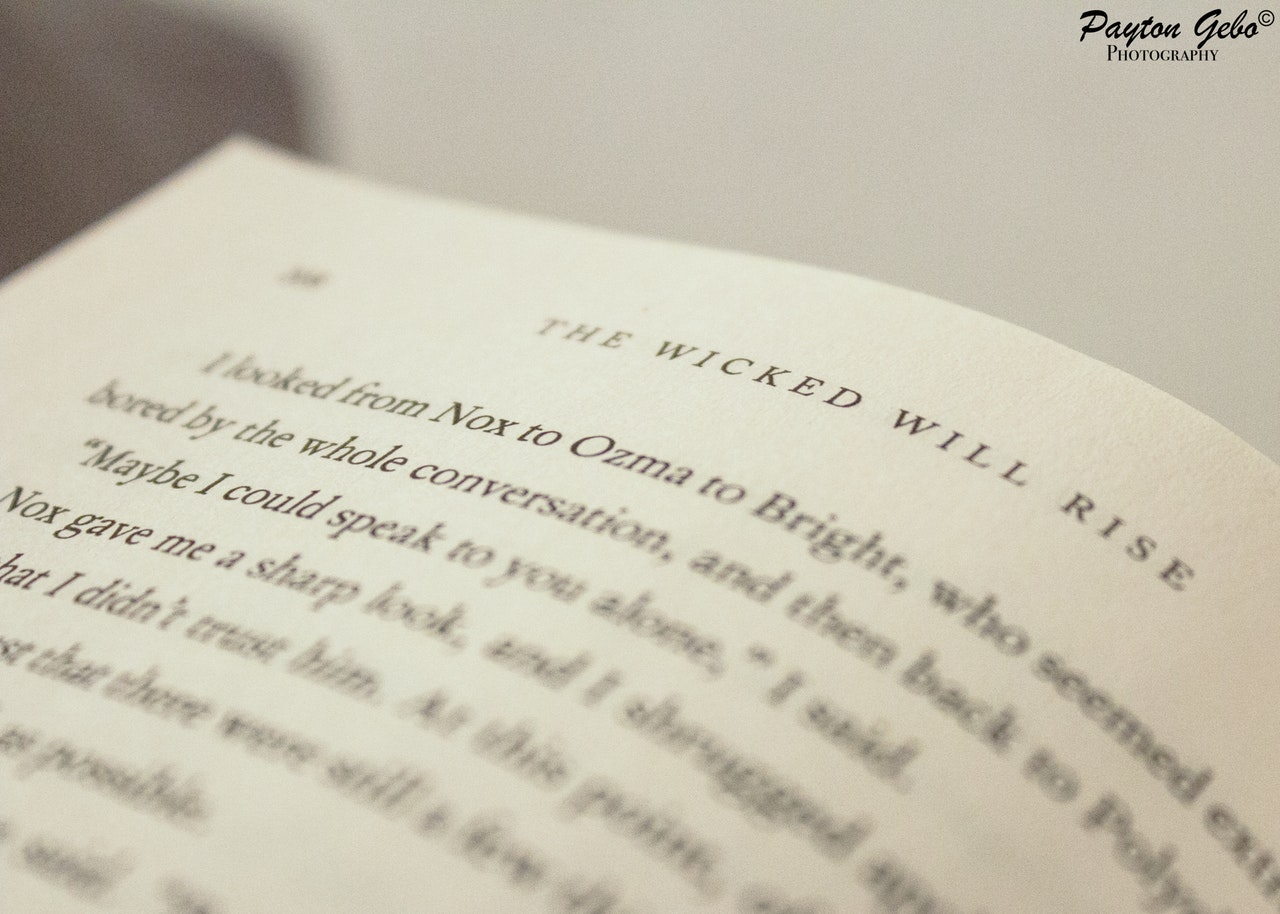
I often have the feeling that even at the best of times literary criticism is fraudulent, since… every literary judgement consists in trumping up a set of rules to justify an instinctive preference. One’s real reaction to a book, when one has a reaction at all, is usually “I like this book” or “I don’t like it,” and what follows is a rationalisation.
— George Orwell, “Writers and Leviathan” (from an interesting reflection at The Bygone Bureau on film criticism.)
comments
Leave a Reply


I like this paragraph. Here’s why . . . .
Not so long ago, our friends, Kent and Brian, were over for dinner. (Kent is founder and creative director for a 150-seat theatre. Over the past 15 years, he has grown his audience from a tiny number of season-ticket holders to over 2,100+. Which, if one cares to do the math, means he has a sold-out house, nearly every night of the run of any show.) We were talking about some other show we’d seen together, in another venue.
I started one sentence by saying, “Now, I’m no critic,…” He slapped the table, and said, “Oh, but you are, you bought a ticket, you saw the show! You have every right to have an opinion about what you saw!”
I came back with something like, “Yeah, but I don’t necessarily have an educated opinion.”
I find myself re-thinking things I’ve said here before about various arts. I think I’ve tried to say, “Something moves me or it doesn’t.” I am trying to decide whether my being moved matters a whit in educated criticism. I read educated critics to tell me what I missed. To tell me why I should appreciate something I might be unmoved by. Sometimes, I am moved by their words.
Andrew–Many people who care about literary criticism know that casual readers often need to be prodded to not settle on a view of literature that misses much of what it has to offer. And here we get to that old pivot point of aesthetics, at which some believe that Art is by definition a thing that the simplest person will appreciate by way of a simple encounter with it, while some believe that an inspired effort to break through limiting habits of seeing is often needed. In my work I have encountered many students who didn’t know that they could love literature until they were shown new ways of looking at it. They are now people who actually read the things they formerly simply had opinions about.
There is an art in bringing another along, helping another to see, Daryl. I’m sure I would love to sit in your classes. (Or, in any of Cindy’s impromptu classes (I wept, at parts, when Cindy delivered “How to be a Mexican,” at Cfs2.)
Rick my dear, Cindy and I look forward to many fine days and evenings spent with you talking of all things that inspire. We miss you as soon as you are out of sight,
I feel like Orwell sometimes, but ever since I was required to read Melville’s “Benito Cereno” ten times in a row through the lens of a different critical perspective each time, I generally have a greater sense of appreciation for it now. If anything, I think Orwell’s statement exposes that the act of criticism can be intellectually taxing. Criticism is the art of really applying yourself to a work in an attempt to mine it for more value than might be readily apparent. Trying and failing to find that value isn’t necessarily rationalizing an opinion–it can also mean that you have seriously engaged with the text and found, not that it has little to offer, but that it was not what you were looking for.
Having said the above, I’ve been here for a few months now, just watching and wondering. Who are you all? What is this place? Do I like it? Do I even get it?
I don’t think I’m even just lurking…I’m eavesdropping. So how many of me are out there listening to you right now? And are you all deliberately speaking at a volume that makes it so easy to overhear?
It’s worth noting that literary criticism is really a different enterprise today than it was when Orwell wrote, when it did much more often tend to be an aesthetic judgment backed by an often-tendentious rationalization, written in fine, high-minded prose. Today critics offer readings, give context, and sometimes take sides — but we don’t really play the “who was more sublime, Homer or Virgil?” game anymore.
That said, there is a whole school of philosophical aesthetics that does say that all of the stuff boils down to “boo!” or “hooray!” and another, more sophisticated one, that says that all of our language-games with respect to art is really just designed to focus our attention in a certain direction, on something that may be ineffable. In other words, that criticism is nondiscursive, alogical, but not unmeaningful.
Wayne
I can’t help but believe true criticism requires intellectually taxing work. That’s why I might call my criticism, opinion. And opinion can be as little as, “I like, I don’t like.” Criticism, is not opinion, but an scholarly foray into the work. And I read such for that foray.
What literary criticism that I have read are hard works to read. (And I’ve scarce delved into it.) But what little I’ve read makes me yearn for more. I think Andrew and I touched on it a little on the mountain. Andrew, was it you or me who said we liked touching these topics in a classroom setting? Was it me or you who said, “I won’t do it on my own, without the construct of classroom to make me do it?”
Well said, Tim. It makes me dizzy to think of how much literary criticism has changed even since I first became interested in it! But I have never lost the sense that writing–and what it can do to move one in unexpected ways–is worthy of discussion and even debate (preferably among friends, with drinks and good food).
Wayne, we’re speaking as loud as possible.
great thread, and thank you Tim, and welcome Wayne.
Art critics are the ones I think sometimes are secretly having a laugh after making their pronouncements. Obviously I am an art philistine, but sometimes I look at modern art, large canvases of white lines and the like, and think “you cannot be serious.”
Cece. Philistine? That thought would never cross my mind about you. As for large canvases of white lines, I’ve been in front of them myself, thinking “there must be something here,” then not seeing it, I shrug and move on. Then later, I’ll read something and think, “Oooo, I saw that.” Then I’ve wished I could look at it again.
I think Moby Dick is one of the grandest achievements of humanity, but if a college course required me to read Benito Cereno 10 times in a row, I’d drop the course. Ditto for Billy Budd.
I have a love of modern art and also recognize the apparent pomposity of many art critics. I don’t, though, buy into the notion that such people are mysteriously absurd while also being able to sell ice to Eskimos. Surely many people are interested in art for its investment potential, and these people often end up supporting the efforts of some artists when they have no idea as to what anybody actually sees in the works. Many of the works I regard as astonishing are viewed as a big “O” by others who might be standing right next to me. I don’t think I have been fooled; I don’t think an art critic has done a “sell job” on me or the museum; and I don’t think I can be led to disparage a work that has moved me deeply because others don’t feel the same way about it. For me, modern art is an opportunity to rebuild one’s ability to see again and again. It requires a stripping away of habit–a starting with some aspect of seeing that is so simple it is pure. And that becomes a chance for me to see what something is, rather than seeing first, and last, what I want it to be. Imagine a person who walks into a museum with a brush and a big bucket of paint, smears each canvas before him with swirls–then steps back and says “that guy couldn’t paint for shit.” That describes something very similar to what many viewers do–they get in their own way and don’t see that they have gotten in their own way. Modern art worthy of viewing again and again is that which reliably offers a kind of engagement rather than an answer. What viewers must supply is a cultivated tolerance for uncertainty. Fine art critics are seeing what others honestly affirm as a worthy occasion for engagement.
Coop, I remember dropping courses to avoid approaches I found odd. But sometimes the odd approaches turned out to be the ones that showed me I didn’t actually know what I assumed I knew. It’s hard to say what should be done sometimes, since only a fool credits it all, and only a fool tosses it all away.
Two best things I like in this thread.
1. Tim:
“That said, there is a whole school of philosophical aesthetics that does say that all of the stuff boils down to “boo!” or “hooray!” and another, more sophisticated one, that says that all of our language-games with respect to art is really just designed to focus our attention in a certain direction, on something that may be ineffable. In other words, that criticism is nondiscursive, alogical, but not unmeaningful.”
This is my actual posture. I spent a good deal of time studying biblical hermeutics and I feel like there was a pressure I felt from that observation in distinction to the “let’s mine meaning from the text” that was going on. I do not, however, pretend to be an expert in that field.
2. Daryl: “Fine art critics are seeing what others honestly affirm as a worthy occasion for engagement.”
If that is where criticism is now, literary or otherwise, then I am on board. It’s not what I have seen, but that sure as hell doesn’t mean it’s not out there.
The more I consider this thread the more I love Deron’s lead off comment: “I like this paragraph. Here’s why….” We are all critics; we all talk about art in casual ways and in serious ways; when art matters to us, we want to account for why it (a work or all of it) matters; we love those leaps of insight that turn a work we didn’t like at first into a favorite.
Coop: Since the professor was a rabid scholar of Melville’s epic poem ‘Clarel,’ the assignment of ‘Benito Cereno’ was an act of mercy. It became like a family member by the end–I didn’t get to choose it, but I learned to love it for its better qualities (and in spite of its bad ones) all the same.
I do try to see what others are seeing. It took me a long time to go to the Hirshhorn because I thought I wasn’t interested. One day I finally went, in a sulk. The others wanted to go. It was very hot and my eyes weren’t used to the dark. I was walking very quickly, trying to get it over with. Suddenly, I was mesmerized by a grouping of sculptures on the ground floor. Then I didn’t want to leave. They hadn’t appeared to be “about” anything, but had affected me in an emotional way.
I had seen these without any preparation and maybe that’s what I need to do. Because obviously something happened to make me defensive about modern art and I am just now starting to think about this.
And there’s nothing wrong with simply liking what you like. I garden. So watercolors of flowers, trees, etc. line my living room wall, painted by an artist friend whose shows I attended and supported. I loved a co-worker’s July 4th fireworks-in-D.C. photograph (it looks like a huge negative but in color) so I bought a copy. To me, the art on the walls of my home is so intimate that I just need to know the artist.
What a wonderful thread!
And that was a very sweet thing to say, Rick. You are right, I’m not really a philistine, but sometimes I worry I qualify at times in certain areas. Like the visual arts. But I intend to work on that!
I value critics, but a critic must obey certain rules for me to engage fully with the intended work. A critic mustn’t waste my time. As a critic myself, that has been one of my hardest lessons to learn. Also, I never assume that the way I feel about a work is correct. I may not know enough about the world in general to properly percieve a work on all the levels it deserves.
When I write a Criterion DVD review, I often find the essay to be one of the most moving portions of their release, and one of the very finest reasons for purchasing one of their DVDs. When the essays are good, well-written by people who understand and adore the film and the history behind it, it takes what seems to be a slightly boring three hour dubbed-Italian epic and transforms it in my mind. I suddenly see how it was made, the troubles it faced, the history behind the events, nuances of the film I hadn’t noticed. And I love it that much more for the understanding I now have.
There are very few people who make me feel this way, make me feel far more intelligent just by talking to them. My friend Jon is an incredibly watcher of film, and is very good at making connections and pointing out small moments that tie it all back together. If I don’t like a film, I often find myself talking to him about it, and over the course of a half-hour or hour-long argument with both sides defending and reasoning, I often find my opinion changed and see that there was some prejudice early on, or some mental stumbling block of my own creation or institution that kept me from Seeing the film as it was. (Some movies are bad, and even when faced with undeniable facts as to their interest of import, I will poo-poo them.)
Carole, that is how I go to the talkies now. I won’t watch previews, I don’t look at posters, I won’t read reviews. I stumble blindingly into the darkened cathedral and wait for the picture show to start. It’s almost the only way to really enjoy things, I’ve found. Then my interest is piqued and I can research and learn more on the back end.
I am very very tempted right now to make sweeping generalized statements about People Who Hate Modern Art, since I love modern art. Modern art and good movies are often hard to watch. They engage the brain, they take it out of you, struggling to understand, to make connections and see what’s happening here. Landscapes are nice, but they feel lazy to me, like the struggle is worth so much more. Loving the difficult thing.
Amanda Mae–I love your description of the way discussion can build a different sense of what’s happening in a film (or book, or painting…); there’s nothing like that feeling of having found a larger appreciation of something by way of intense contact with others.
CeCe, I worried all night that my sudden rant about modern art would seem too blunt; we actually have a long history here (as you probably know) of debating this subject–so naturally I launched in in the middle of past thoughts and talks. I really always just think that the world is so filled with things one might want to know about that we all bob and weave through it in our own ways, with more attention spent here and less there, as the case may be. But a curious mind and a capacity for delight are the rare things that open upon the best things. I kind of focus on fiction, poetry, and various visual arts, and also on the natural world of gardens and wilderness. I’m lost when trying to talk about music in a serious way (one of Cindy’s strengths), and though I love the wonders of science I don’t come close to having the math I would need to really see into the most interesting parts. What I look forward to, though, is the boundless knowledge and curiosity and good will found here on Cluster. Something good is always right around the corner here–and I don’t mean just the things I know about now!
Daryl: I love a good discussion, opinion airing, rant, argument, etc. I don’t take it personally, even when it’s meant to be (unfortunately sometimes).
I think that’s the right thing to do, Amanda, go in unprepared. I did that with one of my favorite movies to this day, “Don’t Look Now.” My best friend walked out of the theater when the little girl fell into the water. But I couldn’t leave my seat. I didn’t sleep a wink that night. And the next day the other moviegoers and I kept saying to each other, “THAT MOVIE!”
As far as art, I don’t know whether Ellis would consider his art landscapey, exactly. Some of it is. I think of this as a sort of a wild bouquet although maybe others would not:
http://www.flickr.com/photos/40740968@N08/4704225981
I know I’ve given this area short shrift. I’m probably still mad because the middle school art teacher had me writing for her because she thought that was my strength. I didn’t want to write, I wanted to paint and draw!
Cece, I’ve often wondered if I have the “qualifications” to comment on something mentioned here. More often than not, I don’t, other than being an active member of the big, BIG, thing that goes on here. More often than not, just being party to the conversation allows one a voice. It seems we’re all thinkers here, and we get to opine, whether we have credentials or not. We all come with our own bag of tricks. For me, it makes it what it is. If we come with thought, whether or not that thought is schooled, we are allowed to say. As you mentioned, something like, “open-minded individuals…” It is my reason to hang around. Somewhere, Clusterflock has been likened to a “neverending cocktail party.” I’m not sure that is far off the mark. (I would add, “with friends you’ve been with all your life, you just didn’t know they existed, until now.”)
Amanda Mae, I hoped you would chime into this post. And you did not disappoint. I hope you are well and happy, my dear. I count you among the most thoughtful present.
To be painfully honest, some of my off-the-cuff comments in this area probably are directed to someone I haven’t laid eyes on in 19 years. But I met him so young and spent the formative years with him. Early on, one of his friends made a not-quite-under-the-breath reference to Henry Higgins and Eliza Doolittle and I did not even understand the reference.
That happens when a curious young thing from the sticks marries into the boarding school/Ivy/gentry. I listened, learned and left after 11 years. I wouldn’t be here today if I hadn’t. And I wouldn’t change it. But I still talk to the comparative literature major in my head. “I want my Kurt Russell album back.” But still.
Rick, you are plenty “qualified,” that is obvious. I love everything you say and want to read more. You also speak from the heart and that is not an easy thing to do.
A brilliant woman I worked with was telling me why she was taking a writing course. She IS a professional writer. But she said she had spent a lifetime building up barriers protecting her real self, her own thoughts and feelings instead of the persona presented to the world. And was having trouble knocking them down. She was going around angry because she was having such trouble with the assignments, little pieces about missing someone, or loving another person, etc.
See what I mean? Thank you for everything you’ve already given.
Jesus! Cece, I just saw this comment. I love this bit of story you shared, and I am humbled by your words. Thank you. I am a mere presence here. There are others who shine much brighter, but thank you. I pleases me to be seen here. Please know you are seen, too. And I love your stories and words. I’ll look forward to anything you care to share here.