July 30, 2010
I’ll show you mine if you show me yours
For years, I have been searching for a first sentence worse than the one I have in mind. Before I divulge, however (a handful of people probably already know what it is), does anyone have a sentence they feel can match the worst first sentence I have found, sight unseen? Does this post even make any sense?
comments
Leave a Reply


Wow, while I’ve plenty of ideas for awful, I don’t even know where to begin with judging worst. Although I am curious as to what you’ve found.
I found mine fifteen years ago.
Fifteen years is impressive.
Crap to stand the test of time
to put it another way, I’ve been looking for a worse first sentence for fifteen years. and the book it’s from won a pulitzer.
yep.
First sentence in a book? For some reason I was thinking first sentence ever uttered by a child. Mine was “Iz [Elizabeth, my sister] did it.”
“Iz did it” would be a good opening sentence for a book.
A green hunting cap squeezed the top of the fleshy balloon of a head
that’s pretty good, Doc. what’s it from?
Deron, I’m glad you posted this; I remember talking to you about it at clusterflockstock2. This is hard for me because I see so many bad sentences! So I’ll have to restrict the pool by staying away from student and amateur works in my quest. It’s also difficult because I don’t tend to continue reading books that have horrible opening sentences: if something so crucial is muffed–why go on? I’m sure I have missed some good works this way, but since I won’t live long enough to read it all this strikes me as a good culling mechanism. I’ll also have to be careful about sentences from books that are simply dated in style. When I read Henry James, for instance, I have to wait for his momentum to take hold before making judgments, since opening sentences containing several semicolons and backward reaching qualifiers are not in line with my present day taste for quick economy. I’ll go to the used books place today and look for some things I have sold back to them!
Daryl, we are like two peas in a peaholder on this. the first sentence test has always been my barometer. the first sentence I’m thinking about is so breathtakingly awful it puts a bullet in the rest of the book — and, as if I have to say it again — it won a pulitzer. fuck it. I’ll link it up shortly.
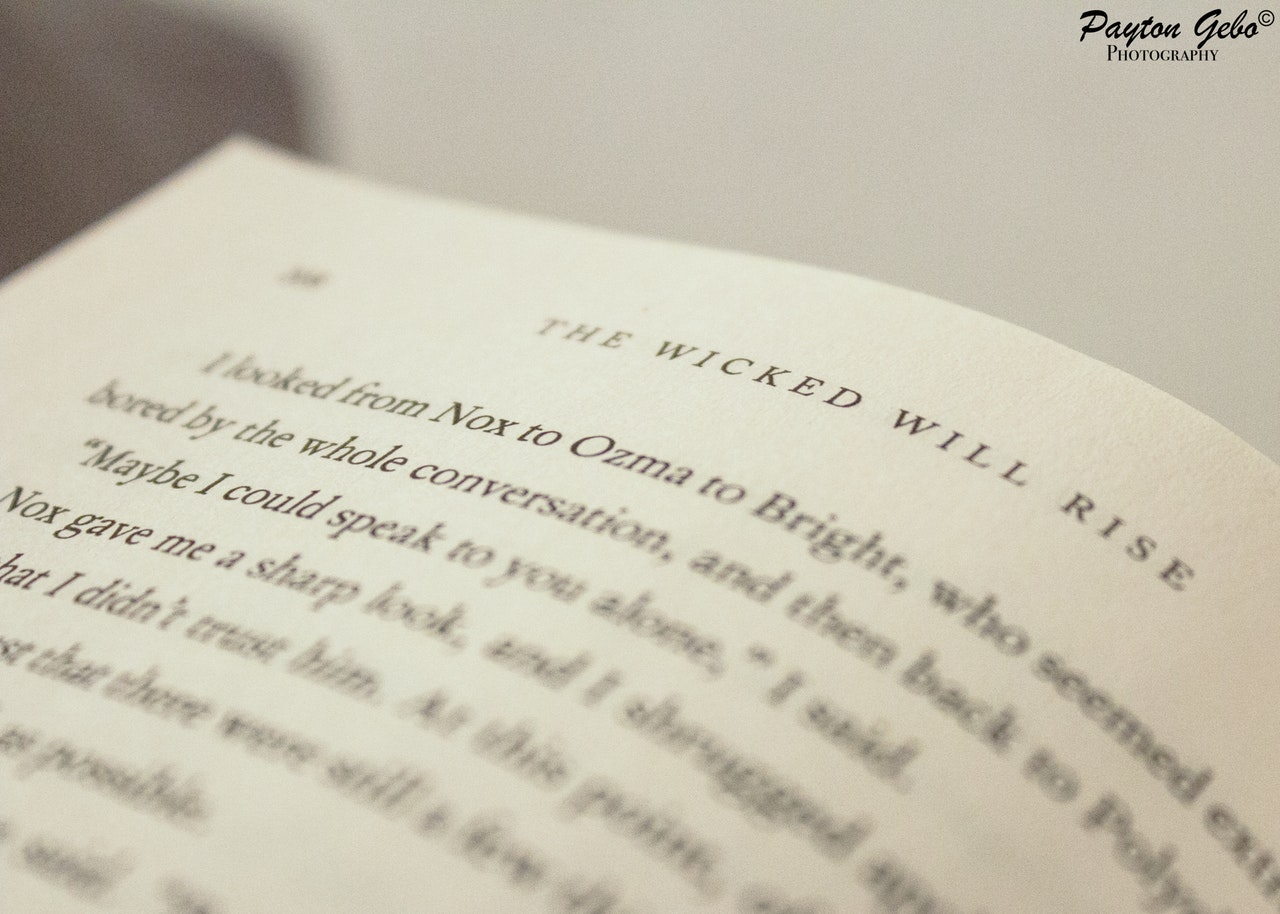
okay, here’s mine.
Damn. You win.
I’m usually one to give a book a good chance before throwing in the towel, but I’m not sure I’d have made it past that first sentence.
fifteen years.
my thinking, Michael, is it’s the author’s responsibility to pay attention to every sentence. if he hasn’t paid attention to the first, my attention is elsewhere. as Daryl said, too many good books.
The Bulwer Lytton Award does exactly what you are talking about:
“It was a dark and stormy night; the rain fell in torrents–except at occasional intervals, when it was checked by a violent gust of wind which swept up the streets (for it is in London that our scene lies), rattling along the housetops, and fiercely agitating the scanty flame of the lamps that struggled against the darkness.”
–Edward George Bulwer-Lytton, Paul Clifford (1830)
I can see that. The reason I usually give myself time is because I don’t trust my own judgment. I know that, in terms of formal education, I missed out on a lot from the literary perspective and, in terms of informal education, I’m just not that well read – something that, at this point in my life, is proving to be difficult to correct (I’m making the attempt anyway, perhaps if I give up sleep). As a result, I do sometimes find myself 100 or so pages into a book that I just can’t stand before I begin to trust my initial instinct.
If any of that even makes sense.
deron –
it’s from a confederancy of dunces. and it was a toss-up between that and the ford book. why i chose dunces is i actaully managed to read the dreck but could not get theough ford’s at all; sometimes later context redeems first impressions…
Michael, that makes sense. at the next clusterflockstock we’ll do a suggested reading class.
Someone else will know the artist’s name, but years and years ago, at Fort Worth’s Kimbell Museum, I saw/heard an installation titled something like “The First Ten Seconds”. The audio portion featured the first ten seconds of Billboard’s Top Forty either from 1964 as a whole or maybe one week in 1964. The inspiration was an observation by one of the legendary deejays of the time, Murray the K or somebody, to the effect that you could tell whether or not a song had that indefinable something within the first ten seconds.
Granted, these were all three-minutes-or-under pop songs. But you get the idea.
Daryl makes an important point about differing historical aesthetics. My favorite example of a book that takes a long time to get going is Conrad’s Nostromo. As I recall, the first 150-200 pages amount to preamble that probably maddens to the point of rejection twenty-first century readers who have not made an irrational commitment to the book.
The pay-off, however, is worth it, and you realize that it would not have the force it possesses had it not been for all that long, slow business at the beginning.
Was the three minute pop song that well established by 1964 already?
Late comment on Bad Sentence thread: I looked for some opening sentences I vaguely remembered, but couldn’t come up with anything that had a chance to match the Ford line. I can say, though, that a novel of note (50 million+ copies sold worldwide) that is absolutely packed with bad sentences is Robert James Waller’s The Bridges of Madison County. I could never get myself to read the whole thing but I often read random bits of it as a kind of driving-past-a-multi-car-wreck syndrome. Waller seems always to lack a sense of economy. A precisely selected adjective will never do–he needs a full scoop of them–and he trusts no reader to remember basic information once a paragraph is behind them (perhaps good thinking on his part, after all). And there is no cliche deemed unworthy of use by this man. Every pickup truck is a dusty old truck–and so on, just apply this mode of perception to everything.
I did think that the film made of the book (Streep and Eastwood) was not bad. Sentimental, but at least acted well enough to bring some humanity to the shitbag of a novel.
Books that sell: did anyone read The Da Vinci Code? Holy crap…
Doc – thanks for confirming my suspicions about Dunces. I thought maybe I was just lacking a sense of humour, but I couldn’t slog the book past chapter 3. I’ve never seen a negative word about it, though, until you mentioned this. Then again, I wasn’t really looking, it just went on my famous shelf of books that I own but haven’t actually read yet.
walt – yes, it was hard to offer a contrary opinion of dunces. there were such an inundation of favorable reviews it was as if the book was actually a new liz taylor perfume. the novel stuck in my craw for all that.
i don’t recall what else what short-listed that year but do remember thinking that there had been years past where no award was given.
There are things I liked very much about Confereracy of Dunces; I think it’s easy to miss the voice in this book. It’s written in a hyperbolic southern tradition of eccentrics, and should be viewed much as Gray Gardens is understood. Another part of the tradition being lampooned is the large portion of Southern men who get themselves highly educated–and then never do a damn thing with it: a medical degree without practicing medicine, or a law degree, and so on.
One thing that probably garnered the novel much more attention than it would have received is the early suicide of the author, and the fact that his mother gave the unpublished novel to Walker Percy and asked him if something might be done with it. Something was done with it, and I’m glad. Some scenes in it make me laugh just to think about them: the main character trying to “organize” workers at the blue jean factory; and later his ritual of watching children’s programs on TV in order to be morally scandalized by the lewd innuendo present in each performance.
Daryl – are you saying dunces would be part of southern gothic?
Yes. But a bit different from, say, Flannery O’Connor’s kind of gothic because it is west of O’Connor’s world, and set more in a cityscape than in a rural arena.
P.S. It’s kind of a Carol Burnette southern gothic.
i’ve always had a hard time with southern writers: faulkner, howard, welty et alis. not because they couldn’t (obviously) write their asses off, but because their broader material is alien; missouri may be counted a “southern” state but its history & sensibilities, especially regarding “the war between the states”, doesn’t touch me; i do not suffer from original sin, slavery or the regional eccentricity you describe. thus it is nigh impossible to engage with books of this type.
..and women writers?
I could not read Dunces despite trying several times.
well, i’ve mentioned welty. and o’connor carried too big a cross. i found some commonality with lee, but i read “mockingbird” as a kid – that may have swayed me. mitchell’s “wind” i view as a historical “valley of the dolls”, sans pharmaceuticals.
on the other hand i like early james lee burke, adore cormac, and thought rice’s “interview” was great, but that’s probably thirteen differnt things, eh?
There are books I’m supposed to appreciate that I don’t, or that leave me wondering what others see in them. In the end it seems to come down to such things as–when, in one’s life, the book was encountered, or what, exactly one expects a book worthy of one’s time ought to do. Books are a good way of asking one’s self–who is missing something?
“…when, in one’s life, the book was encountered”
i think you nailed it.
Doc, I like your taste. It strikes me as well developed and toughtful and not given to sway produced by academics and smartasses. That’s the way I strive to be when it comes to lit, although such things sometimes matter more, and in different ways, to different people. My comment about women writers above is just an oblique way of noting that literature is always about equivalent experience. (I’m not trying to lecture anybody here–I know everybody knows this.) This is why it’s possible for us to read a text that’s 2,000 years old and still recognize our own concerns in their struggles. When it comes to Southern writers, such as Welty and Faulkner, it’s interesting to note how many of the Latin American Magical Realists (Gabriel Garcia Marquez, et. al.) were so profoundly influenced by Faulkner–not to mention the many Japanese writers who were influenced by Faulkner as well. They didn’t have to share regional experiences–they shared human experiences. Slavery is slavery is slavery, and revolution is…revolution. Russians choked by Stalin sought out American Jazz, even when it might mean their deaths to be caught with it. I used to have long arguments in graduate school with multi-cultural studies people who would say that one must be an African American to write fiction featuring African American characters. But they didn’t have an answer when I asked–But does that mean that a person must also be an African American to read a work by such a person?
Andre Voznesensky once said “I ponder with astonishment, the unity of human fnatasy.” I do too.
daryl – back at you. not that i expected a knee-jerk defense of southern lit on clusterflock; that’s not clusterflock.
and your larger point (shared human experiences)is well taken; indeed all of art is just that expression, yes?
if i delve deeper i am left with impatience at the continuance of certain themes, the burnishing of old bruises: early burke deals with the subject off-handedly, respectfully, but doesn’t mine the material endlessly. cormac wrote orchard keeper & child of god and then moved west without a backward glance.
but what do i know? i held out a lot of hope for “play dead”.
; ‘ )