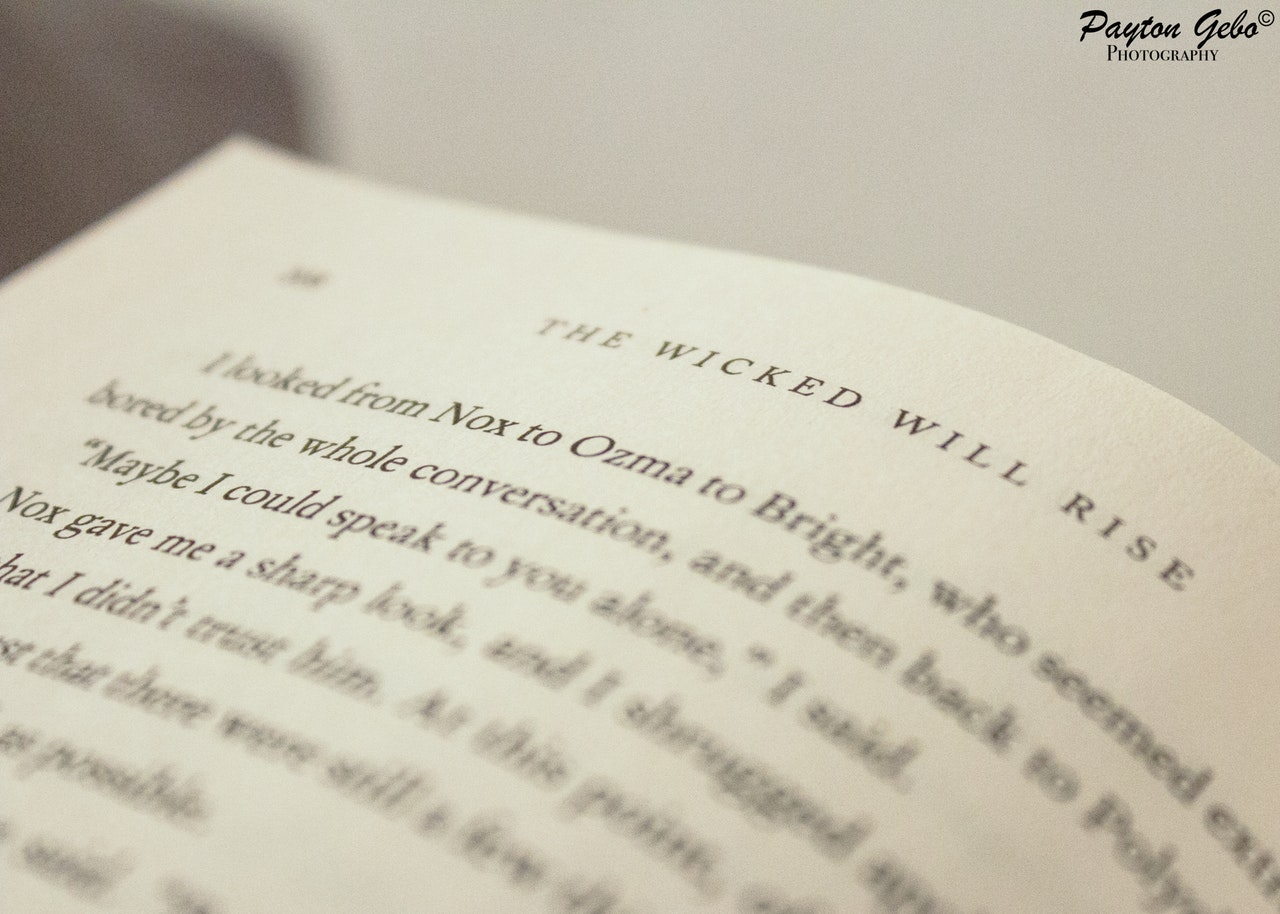
quote out of context
Behind its flower box framed windows, hidden away from mourners, is an automated storage system. It stores and chills encoffined corpses, delivering them through hatches and into a viewing room, day or night, whenever friends and family come to pay their respects.
(via marginal revolution)
@Walmartlabs
You think of large tech companies like Google or Apple having extensive R&D labs, but Wal-Mart opened one after its low-cost advantage began to disappear.
In one experimental project expected to debut for the holiday season, @Walmartlabs has been recruiting people to test Shopycat, a Facebook and web app that uses people’s social-media profiles and comments to generate gift ideas.
“Most of the recommendation systems you see today in online shopping are based on prior transactions,” said Mr. Harinarayan, who worked for Amazon in the late 1990s when its system was developed. The system works well for books, where people tend to buy in the same genres, he said, but so much not elsewhere.
“It’s our belief that more than past transactions, your interests and what interests of yours are trending are better predictors of what you’d be interested in buying,” he said.
(via @tcarmody)
He could have set the Guinness World Record for people who wanted to kill him
The story of Edgar Valdez, aka La Barbie, an American citizen who rose to the top of one of Mexico’s prominent drug cartels.
Like many Texans, Barbie grew up right across the border from Mexico, in the city of Laredo. The place feels like something from a Mexican postcard, with cobblestone plazas and picturesque waterfalls – except for the massive, multilane bridge to Mexico that cuts straight through town. Until the drug war, everyone in Laredo saw the two sides of the border as one; many families, after all, had blood ties in both Mexico and the States. As a kid, Barbie loved to visit Nuevo Laredo, a border town bustling with donkeys, food carts, girls in little embroidered dresses, shoeshine boys and the smell of roasting corn. It was like stepping into another world, and all you had to do was cross the bridge.
In high school, Barbie was in the popular crowd, horsing around in the breezeways outside of class and waging egg wars after school. On weekends, he went to keggers on ranches, played elaborate scavenger games and hung out with his steady sweetheart, Virginia Perez, a bubbly, blue-eyed blonde. He grew up in a middle-class development on the outskirts of Laredo, a kind of no man’s land where Burger Kings didn’t begin to sprout up until the Nineties. Even the people of Laredo considered it “Indian territory,” an area rife with dope and illegal immigrants. Barbie’s parents raised him and his five siblings in a tidy, orange-trimmed home with palm trees in the front. “They’re regular Ozzie and Harriets,” says Jose Baeza, a spokesman for the Laredo police department. “They’re business owners, PTA, morning-jog people.”
Here’s a link to the printer friendly version.
(via the browser)
from the comments
This seems a good place to say I’ve been singing “Tyrone” ever since yesterday afternoon. Y’all should hear me. I’m singing it right now in my office.
I’m gettin tired of yo shit
You don’t never buy me nothin
Toilet Paper History: How America Convinced the World to Wipe
The first products designed specifically to wipe one’s nethers were aloe-infused sheets of manila hemp dispensed from Kleenex-like boxes. They were invented in 1857 by a New York entrepreneur named Joseph Gayetty, who claimed his sheets prevented hemorrhoids. Gayetty was so proud of his therapeutic bathroom paper that he had his name printed on each sheet. But his success was limited. Americans soon grew accustomed to wiping with the Sears Roebuck catalog, and they saw no need to spend money on something that came in the mail for free.
via @stevesilberman
Is this something?
Software or (solar-powered) hardware modifications for hybrid/electric cars that offer the purchaser a selection of motor and/or muffler noises appropriately synchronized with accelerator use.
Artifice and foam rubber
In fact, so much artifice and foam rubber is often used to create the sexually alluring woman that it’s sometimes difficult to know where the lady ends and the foam rubber begins.
Via dangerous minds by way of Roger Ebert.
On the redemption of physical reality
“This is, of course, what (film theorist) Siegfried Kracauer meant when he spoke of the ‘redemption of physical reality.’ It’s also at the heart of Werner Herzog’s new documentary, The Cave of Forgotten Dreams (2011), in which he attempts to retrieve the ‘now’ of prehistoric cave painters flickering into life – the analogy often used to explain the psychological power of film.”
In the same way that cutting ourselves off from any older aspect of our culture diminishes us by dimming our awareness of who we were and how that made us who we are, there is something lost when we turn away from the gray ones.
It’s quite a long piece, but it is worth reading. Bill Mesce’s The “Gray Ones” Fade To Black, brought to attention by Ebert.
Milton Glaser on the fear of failure
(via Ali Douglass)
fake Apple stores
Being the curious types that we are, we struck up some conversation with these salespeople who, hand to God, all genuinely think they work for Apple. I tried to imagine the training that they went to when they were hired, in which they were pitched some big speech about how they were working for this innovative, global company – when really they’re just filling the pockets of some shyster living in a prefab mansion outside the city by standing around a fake store disinterestedly selling what may or may not be actual Apple products that fell off the back of a truck somewhere.
Clearly, they had also been told that above all, they must protect the brand. As I took these photos I was quickly accosted by two salespeople inside, and three plain clothes security guys outside, putting their hands in my face and telling me to stop taking photographs – that it wasn’t allowed. And why wasn’t it allowed? Because their boss told them so.
The Secret Bookshop
via The Paris Review
What goes around
About 8 months ago, a 7-11 that I pass each day on my way to work got bulldozed. It was on a prime corner, and I wondered at the decision, since the store seemed always to be packed. A For Sale sign went up, “Will Build to Suit.”
About a month ago, construction began on a new building. Today it finally became recognizable.
Another 7-11.
Four-year-old in Target
Grammy, Christian kicked me in the peanuts.
Mr. B.’s Vegas Posse

There, on the left.
quote out of context
During production of a film we were doing, over the phone with the client, we were discussing a scene where the actors begin fighting each other with lightsabers. We explained how we’d create the effects, work it out in post-production. Then the client speaks up and says, “Why don’t we just use real lightsabers?”
What if the U.S.D.A subsidized gardens?
Roger Doiron of Kitchen Gardeners International, a Maine-based nonprofit, has put together this nifty graphic that shows the planting layout of the White House vegetable garden – which is more an ideal than a typical garden, but not uncommon in its choice of plants – and then re-imagines how it would look if it were to reflect the crops that the federal government supports. The change is pretty stark. The data is culled from the Environmental Working Group’s fantastic farm subsidy database.
This hits straight to the heart of the heartland.
headline of the day
Rent A Grandma Begins National Rollout via its Franchises
so certain was he of his fate that, when he heard someone breaking in, he got out of bed, went to his window and yelled, “I’m coming!”
The subtext of this longish analysis of the interplay of Mexico’s political system and drug cartels is the relationship all of it has with the United States.
It was also during the Fox administration that the US ban on assault weapons expired. Beginning in 2004, high-powered firearms could once again be purchased easily in states like Texas and Arizona, transported with little effort across the porous border and sold at inflated prices to criminals in Mexico. Not surprisingly, organized crime groups were soon running the North-to-South weapons trade as well. The Mexican government says that in the past four years it has recovered 60,000 guns traceable to dealers in the United States.
In the futile scenario of whack-a-mole that is the history of US counternarcotics efforts, the Gulf Cartel’s breakthrough came in the late 1980s, when a massive crackdown by the US government on drugs flowing through Miami led Colombian cartels to reroute much of the cocaine trade through Mexico. The Gulf Cartel emerged as one of the key middlemen between Colombian producers and American buyers, and it came to dominate the trafficking route in the three states along Mexico’s eastern border with the United States: Tamaulipas, Coahuila and Nuevo León.
tweet of the day
The Psychopath Test
It is an awful lot harder, Tony told me, to convince people you’re sane than it is to convince them you’re crazy.
After the conference, though, Hare seemed introspective. He said, almost to himself, “I shouldn’t have done my research just in prisons. I should have spent some time inside the Stock Exchange as well.”
“Serial killers ruin families,” shrugged Hare. “Corporate and political and religious psychopaths ruin economies. They ruin societies.”
A few quotes from a chapter of Jon Ronson’s new book on psychopaths, The Robert Hare Checklist, and the mental health of CEOs and traders on Wall Street.
Image out of context
Consolidation in the baking aisle
To look at these tins of baking powder, one might imagine three very different brands. Indeed, their designs reference three distinct origin stories and each has its regional loyalists. Their contents, however, are all manufactured in an aging Terre Haute, Indiana, factory owned by Hulman & Co.
Disney applies for ‘Seal Team 6′ trademark
The Walt Disney Co. has applied for a trademark on the name “Seal Team 6,” the name of the unit of specially trained Navy SEALs that killed Osama bin Laden in a raid in Pakistan earlier this month.
(Eh, thanks, Allen.)
“Right now, we have over 250 clients,” said Centre, 62, who is retired and pens anti-religion books under the name Dromedary Hump.
In 2009, he launched Eternal Earth-Bound Pets USA. Centre guarantees that if or when the Rapture comes he or one of his 44 contractors in 26 states, including Washington, will drive to your home within 24 hours, collect your dog, cat, bird, rabbit or small caged mammal, and adopt it. (Rapture rescue services for horses, camels, llamas and donkeys are limited to New Hampshire, Vermont, Idaho and Montana.)
The cost is $135, plus $20 per additional animal. Payable upfront, of course, and good for 10 years.
Is it really that easy?
Huh.
Go into the kitchen of a Taco Bell today, and you’ll find a strong counterargument to any notion that the U.S. has lost its manufacturing edge. Every Taco Bell, McDonald’s, Wendy’s, and Burger King is a little factory, with a manager who oversees three dozen workers, devises schedules and shifts, keeps track of inventory and the supply chain, supervises an assembly line churning out a quality-controlled, high-volume product, and takes in revenue of $1 million to $3 million a year, all with customers who show up at the front end of the factory at all hours of the day to buy the product. Taco Bell Chief Executive Officer Greg Creed, a veteran of the detergents and personal products division of Unilever, puts it this way: “I think at Unilever, we had five factories. Well, at Taco Bell today I’ve got 6,000 factories, many of them running 24 hours a day.”
It’s as if the great advances of human civilization, in everything from animal husbandry to mathematics to architecture to manufacturing to information technology, have all crescendoed with the Crunchwrap Supreme, delivered via the pick-up window.